
Triviaging:
Competitive quizzing in one's 60s

Hi everyone! Long time no write. The semester has ended and I am finally getting back to posting. My plan is to try and post bi-weekly over the summer. As I mentioned in my first post on here, these posts serve as a way to get me writing and to share some of my thoughts with you as I am working on writing up research for journal publication
First things first. Though this is going to be a psychology/trivia post, I’d be remiss if I didn’t say how terrible things are in the country for the vast majority of us in higher education and elsewhere. The cuts being made in DC and their ripple effects have hit close to home as several friends and colleagues have lost their jobs and/or funding for research, and the Fellowship program that my post-doc was a finalist for was cancelled at the 11th hour. I’ll write more of my thoughts in a future post but since I have started this one, I’ll finish it. And here’s the disclaimer: All opinions in Trivialogue are my own as a private citizen.
Psychologue
As some of you know, I was fortunate enough to have been a contestant on Jeopardy! and even more fortunate to have won a game and a decent chunk of cash. It’s hard to believe, but my episodes aired 9 years ago when I was 56. That is older than most contestants but by no means is it very old for a contestant—a woman on my first tape day who was in her 60s won before I even got on the stage. At the time I didn’t feel like my age was a disadvantage against my considerably younger opponents: My reflexes on the buzzer were solid and I was able to pull most of my responses quickly and without issue, despite mystifyingly saying Corey Fuller instead of Cory Booker on a clue that I knew cold (I’m from Jersey, essentially third-generation Newark). However, I’m not sure that I’d feel the same way now at age 65. In the online trivia leagues I play that have a time limit on responses, it has recently felt more difficult to pull a correct answer if I don’t bring it to mind immediately or if I think of an incorrect response first. So I’m glad I took the TV plunge when I did. But what does the science say about age and memory and other cognitive abilities? Is my experience the rule or an exception to it?
For a good chunk of the 20th century, most accounts of the impact of getting older on cognitive abilities were pretty dire, concluding that cognitive decline of one type or another was inevitable and therefore we’d be better off doing the tasks that require sharp thinking younger in life. To be clear, I am talking about typical cognitive aging, not the kind caused by Alzheimer’s or other types of dementia. Our understanding of cognitive aging took great leaps forward thanks at least in some part to the work of psychologists such as K. Warner Schaie and his colleagues, notably Sherry Willis. Schaie’s dissertation was the first piece of data collection in what has become known as the Seattle Longitudinal Study. Not only is this a longitudinal study that follows participants across time, but it is also one of the premier examples of a sequential study, which follows individuals from multiple cohorts (as defined by time of birth) as described in his important 1965 paper. In essence, a sequential design can be thought of as a series of longitudinal studies with individuals from different birth cohorts. By doing research in this manner, we can logically and mathematically disentangle the impacts of time of birth, time of testing, and participant age itself on any observed developmental changes. One of the great findings of this work was that it showed that people of the same age (say, 60) born at different times (say 1900 vs 1940) did not necessarily show the same trends in the decline of cognitive abilities with more recently born people, on average, showing less of a decline than those born earlier.
When you think about it, this finding makes a lot of sense. Folks born around the turn of 20th century were born prior to the era of the development of common childhood vaccines and the invention of penicillin and other antibiotics, they had to survive the flu epidemic and World War I in the early 20th century as well as the Great Depression and World War II during their adulthood when food and resources were scarce for many. The advances of the 20th century increased lifespan significantly and one can also assume that it improved overall health which, in turn, promoted cognitive functioning. This work and work that followed also demonstrated that continuing to be physically and cognitively active as we age are both associated with at least the maintenance—if not improvement—of cognitive functioning well into the lifespan in the absence of other organic issues.
So what does this have to do with ME? :). Once I was on Jeopardy, a hidden world of competitive quizzing revealed itself to me. There are text-based online games such as LearnedLeague, BPTrivia, and World Trivia Federation where one has ample time (typically about 24 hours) to respond to a set of questions. In addition there are video-chat based competitions including Online Quiz League and the new QuiP Trivia games in which there are both individual and team games during which one has a very limited time (15-30 seconds typically) to answer a question. I enjoy both types of games greatly and have had modest success in both, but as I have played these games over the last 5+ years, I have found myself increasingly bothered by the time limitations in the live video games for a couple of reasons. First, sometimes I just can’t remember something that I know—or thought I knew—that I hadn’t thought about in a long time within that brief time frame. Second, and often more annoying to me, is when I think of a response that I know is wrong and then that response seems to “block” me from the recall of another answer which, as it turns out, is often the correct one. As a recent example, a recent question asked us to identify an actress, who, among other things, appeared in the movie “Pitch Perfect.” The question pointed directly to Anna Kendrick (not a favorite of mine), but once the name Rebel Wilson (who was also in Pitch Perfect) popped into my head I was unable to get to Kendrick in what was left of my 15 seconds.
To anyone who has taken a cognitive psychology course and/or studies memory these phenomena are not surprising and represent common memory processes known collectively as interference. In proactive interference previously learned information can block or delay more recently learned information. Retroactive interference is the converse: Newly learned things can inhibit the recall of things learned earlier. There are of course many other reasons why we can’t recall things including poor encoding of information at the time of learning, confusing or conflating information with other similar but distinct information, and so on. My troubles could be a function of these but also be caused in part by “Word-Finding Difficulty”, a well-known phenomenon in later adulthood that may be a function of changes in other cognitive abilities including processing speed and decreased inhibition of competing possible responses.
So you may be saying to yourself, “Well Doug, why don’t you try and re-learn the things you’re forgetting or learn some new stuff?” Believe me, I’m trying. When I have some spare time I spend some of it answering and then studying lists and quizzes on Sporcle or other similar sites, things like Best Picture Oscar winners, African countries, or Super Bowl winners, and though I am making some progress though it is slow going. I see my younger trivia friends doing the same things, or making flash cards to study, or engaging in other forms of learning and memory strategies, and becoming much better players as a result. The problem is that it seems that I don’t learn as well by rote memorization as I used to. There is research that says that rote memorization in older adults does not always improve recall immediately, but that it can potentially have a delayed positive impact on processes in the hippocampus and memory improvement in tests several weeks later. So, if you’ll excuse me, I better get back to Sporcle!
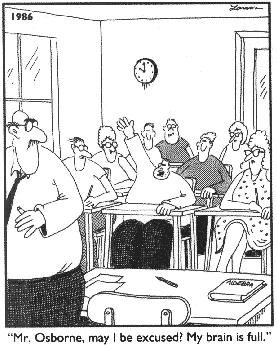
As of now, I’m not terribly worried about these issues because I still feel reasonably sharp but they do rear their ugly heads when I’m under a time crunch. As a result, I am considering scaling back my trivia activities that require these sorts of fast responses. I’m not going to do this any time soon but I can see the day coming when my trivia strength will not be answering questions, but rather asking them.
New to Trivialogue? Would you like to receive these posts directly to your inbox? Simply click the purple link below to subscribe!
TRIVIALOGUE: Today’s questions are about people who did amazing things late in their lives.
Born in 1779, this man published numerous scientific papers, wrote entries for the new Encyclopedia Britannica, and invented the log-log slide rule. However, he was forced to resign from the British Royal Society at age 70 but proceeded to publish his most well-known work (by far) when he was 73. Who is this astute, brainy, brilliant man?
Born Anna Mary Robertson in 1860, what artist picked up a paintbrush for the first time at age 76 when she became unable to handle embroidery needles because of severe arthritis? Upon her death at age 101, President Kennedy said “The directness and vividness of her paintings restored a primitive freshness to our perception of the American scene.”
Between January 1999 and February 2000, Doris “Granny D” Haddock walked from Pasadena, CA to Washington, DC in support of what cause which was being championed in the Senate by John McCain and Ross Feingold? What makes this feat even more amazing is that she started it at the age of 88 and turned 90 before she was finished.
Who is the oldest person to have won an Academy Award for acting? This individual won his second Best Actor award in 2021 at the age of 83 for his work in The Father, nearly 30 years after he won his first such award for a much less…ummm…paternal role.
What performer nicknamed “The Screaming Eagle of Soul” released his first full length album at the age of 62 in 2011? He performed a variety of classic soul tunes, newer compositions he wrote with his bandmates, and covered songs by artists such as Neil Young, Nirvana, and Black Sabbath whose “Changes” was the title track of his third album. Unfortunately, he was able to release only four albums before his untimely death in 2018.
SCROLL DOWN FOR ANSWERS!
.
.
.
.
1. Peter Mark Roget. Yes, the man responsible for the thesaurus was a bit of a polymath. Some report that he suffered from depression throughout his life, though his penchant for list-making is more suggestive of an OCD or ASD condition.
2. Grandma Moses. Though she was born in New York State and lived most of her life there, the museum that hosts the largest collection of her works is just across the state border in Bennington, Vermont.
3. Campaign Finance Reform. Prior to researching these questions, I hadn’t recalled (or knew about?) Haddock’s literal walk across America. The Bipartisan Campaign Reform Act, sponsored by McCain and Feingold, was signed into law in 2002. Haddock also ran for (and lost) a US Senate seat from New Hampshire in 2016. Unfortunately and ironically, the Citizens United Decision of 2010 was taken in January 2010 two months before Haddock’s death at the age of 100.
4. Sir Anthony Hopkins. Hopkins, of course, won his first Best Actor Oscar in 1992 for portraying Hannibal Lector in “Silence of the Lambs.” Though he broke Christopher Plummer’s record for this distinction, Plummer currently holds the record for the oldest nominee for an acting Oscar being nominated for Best Actor in a Supporting Role in 2017’s “All the Money in the World” at age 88.
5. Charles Bradley. Bradley’s story is both redemptive and sad. He worked for many years as a James Brown impersonator before being ‘discovered’ and becoming celebrated for his powerful delivery and persistence through the many hardships of his life. Here’s my favorite Bradley song from the “Changes” album. He was all about change.
How’d you do on today’s Trivialogue? Comment below and thanks as always for your engagement!
Oof, 1 out of 5 on this one. Guess I’m slipping too, Doug.